
Featured Projects
Projects
A deeper look at my recent work.
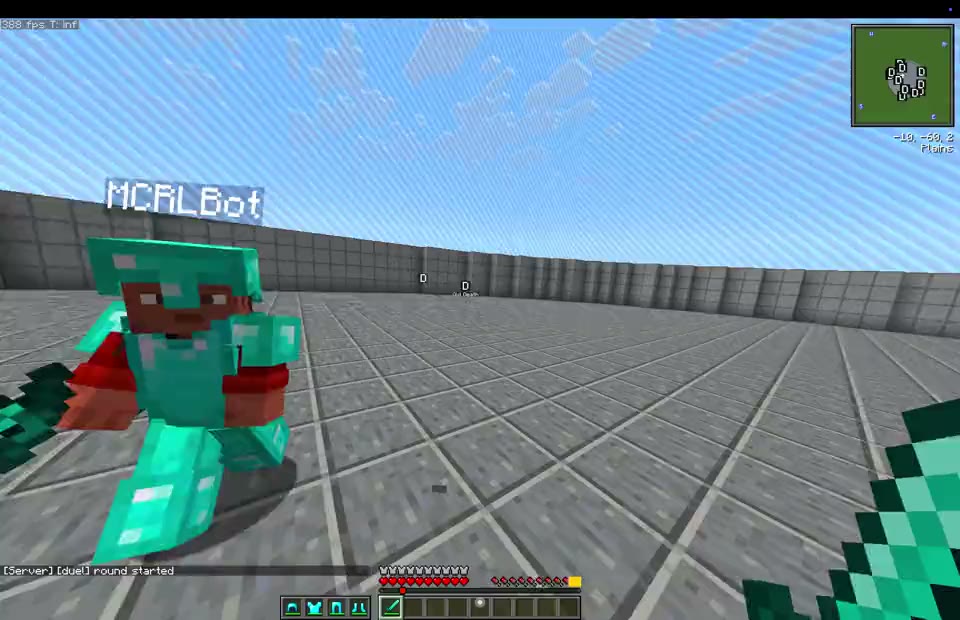
Minecraft RL Combat Agent
Self-play RL agent that beats 99% of human players in Minecraft sword duels
A reinforcement learning agent that plays Minecraft sword duels, trained with PPO self-play in a headless C++ reimplementation of the game's combat physics. The bot is currently the strongest performing autonomous Minecraft PVP agent in the world. A Java client mod runs the full network inside the real game, where the agent wins about 99% of live duels against human players and stays clean on anticheat flags.
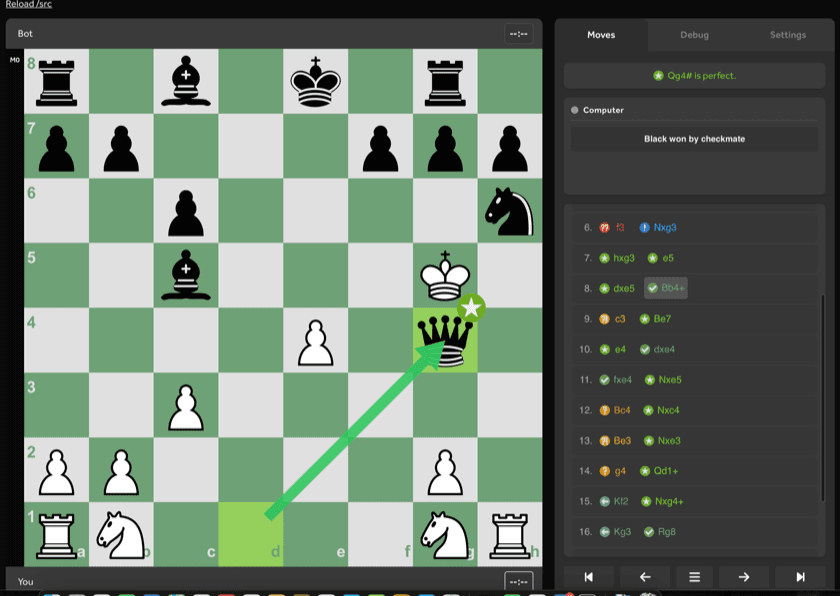
Pufferfish
Chess engine that placed 3rd overall out of 75 teams at ChessHacks
Built the Pufferfish chess engine for ChessHacks, placing 3rd out of 75 teams by combining Python-based search logic with an NNUE evaluation function.
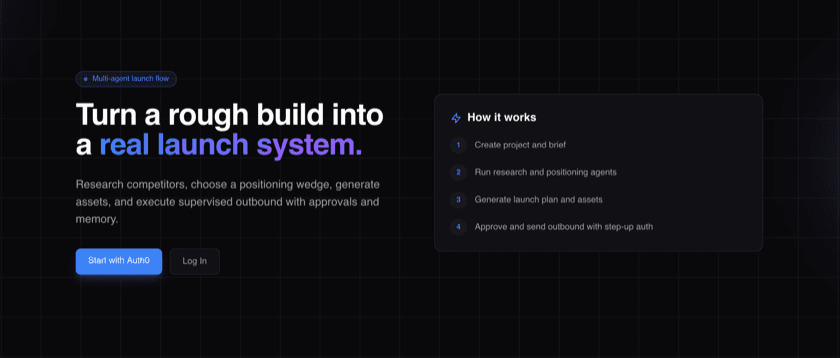
LaunchPilot
Multi-agent launch copilot that won 2 tracks at Hack Canada 2026
Built in 36 hours at Hack Canada 2026, winning the Backboard.io Best Use track and placing Top 3 in the SPUR Build a Real Canadian Startup track. LaunchPilot turns a product description into competitor analysis, scored positioning wedges, and a 7-day launch plan by chaining 3 agents through strict JSON schemas. Each stage persists its own agent memory, letting users resume a launch mid-flow, with a Next.js workflow guiding builders from project brief through market research, positioning, launch assets, and approval-gated outreach.
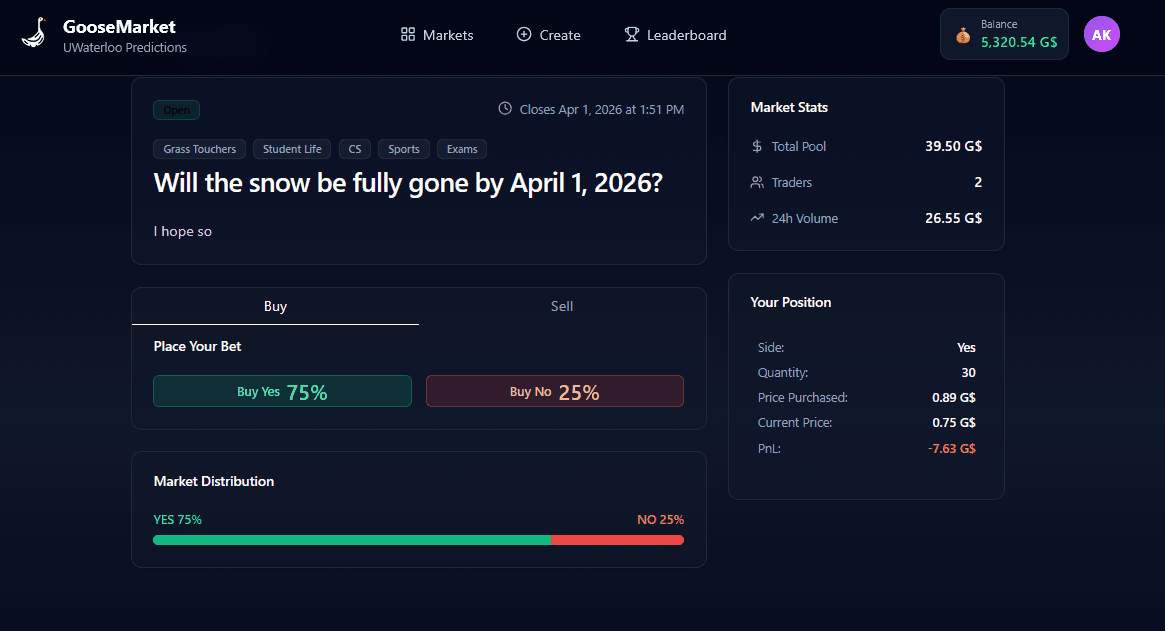
GooseMarket
Waterloo-only prediction market for campus events
GooseMarket is a Waterloo-only prediction market platform built with Flask and Supabase that lets users trade on campus events using an internal currency. The system includes a complete trade, accounting, and portfolio pipeline optimized for backend efficiency and reliability. An automated market maker is used to provide liquidity for markets.
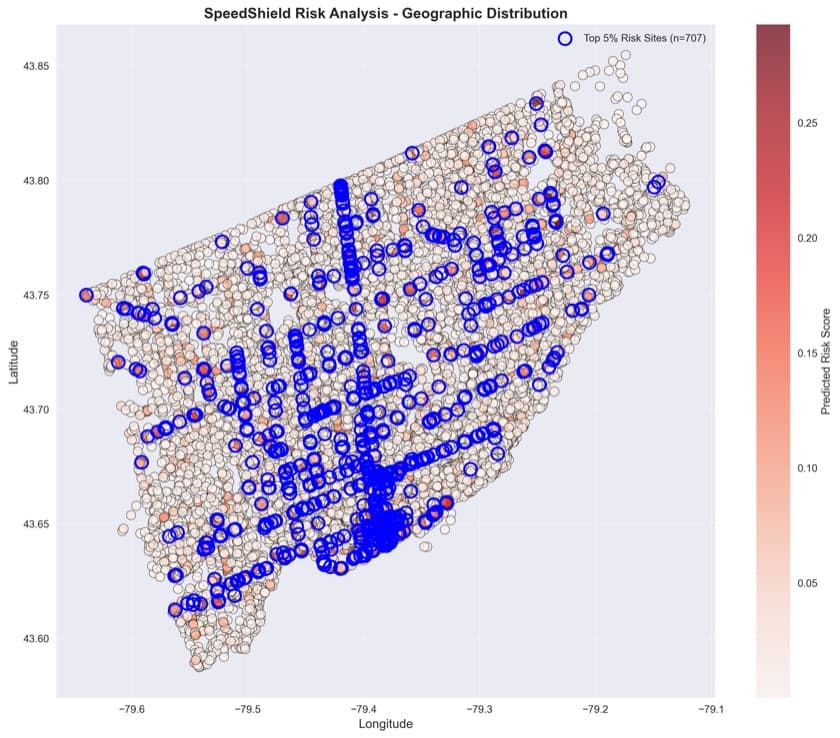
SpeedShield
Machine learning model to find optimal speed camera placement locations in Toronto
Parsed and engineered key features from 6 public City of Toronto traffic datasets to create a comprehensive training dataset for our model. We achieved 95% accuracy on validation dataset of existing cameras, demonstrating strong model alignment with existing placement criteria. To present our findings, we created informative visualizations and an interactive frontend to display optimization results.